


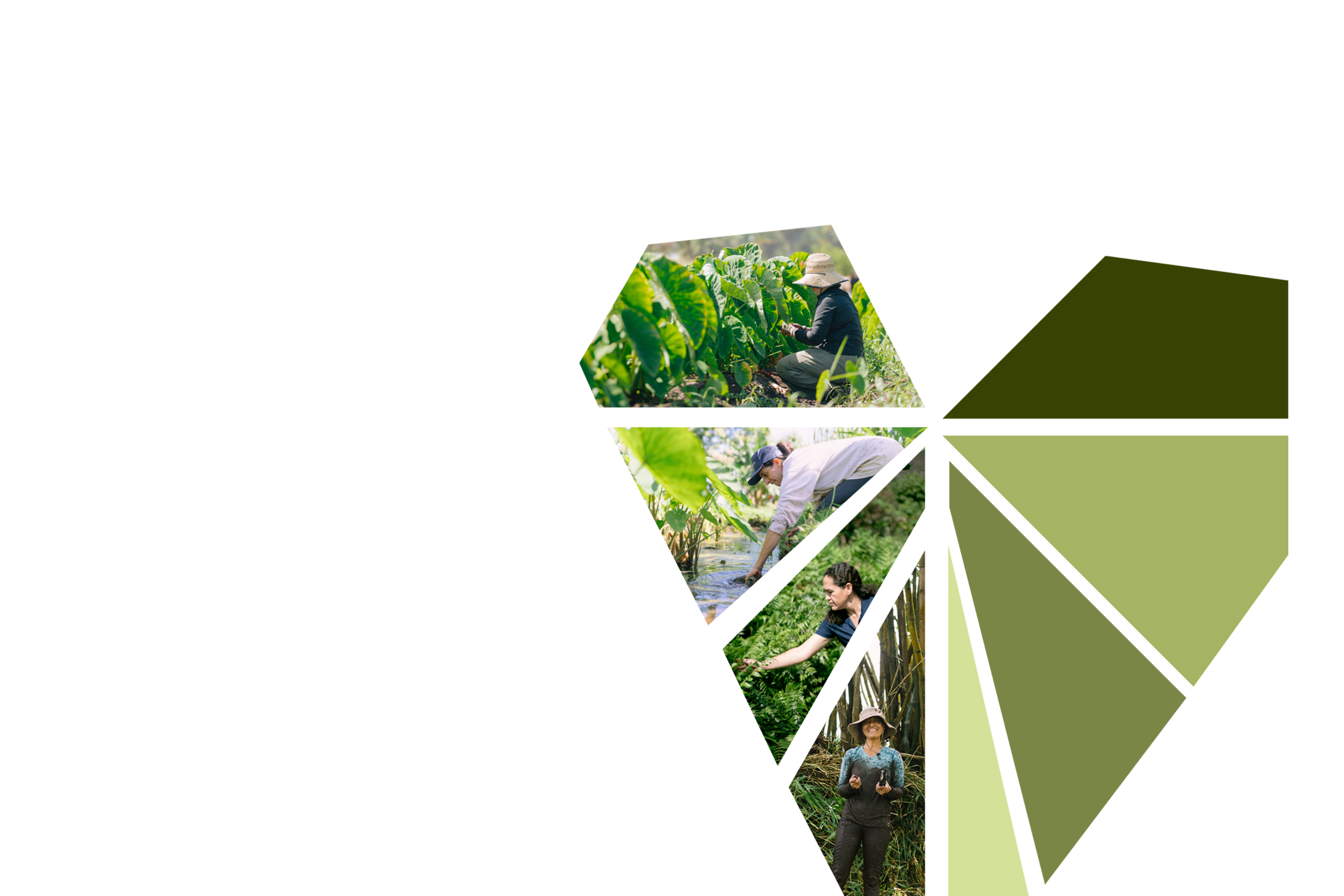
2026 COHORT INFORMATION
MO‘OLELO
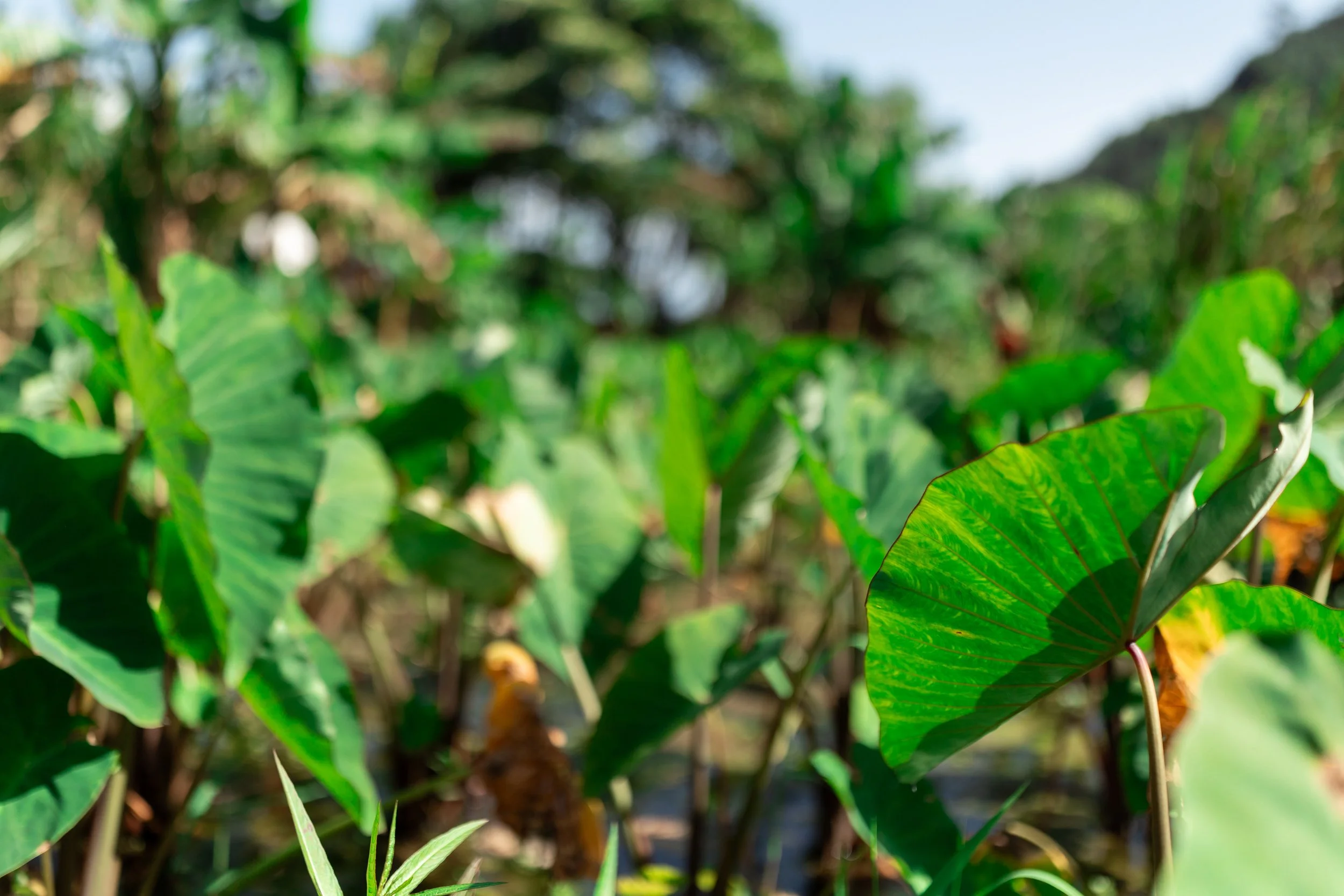
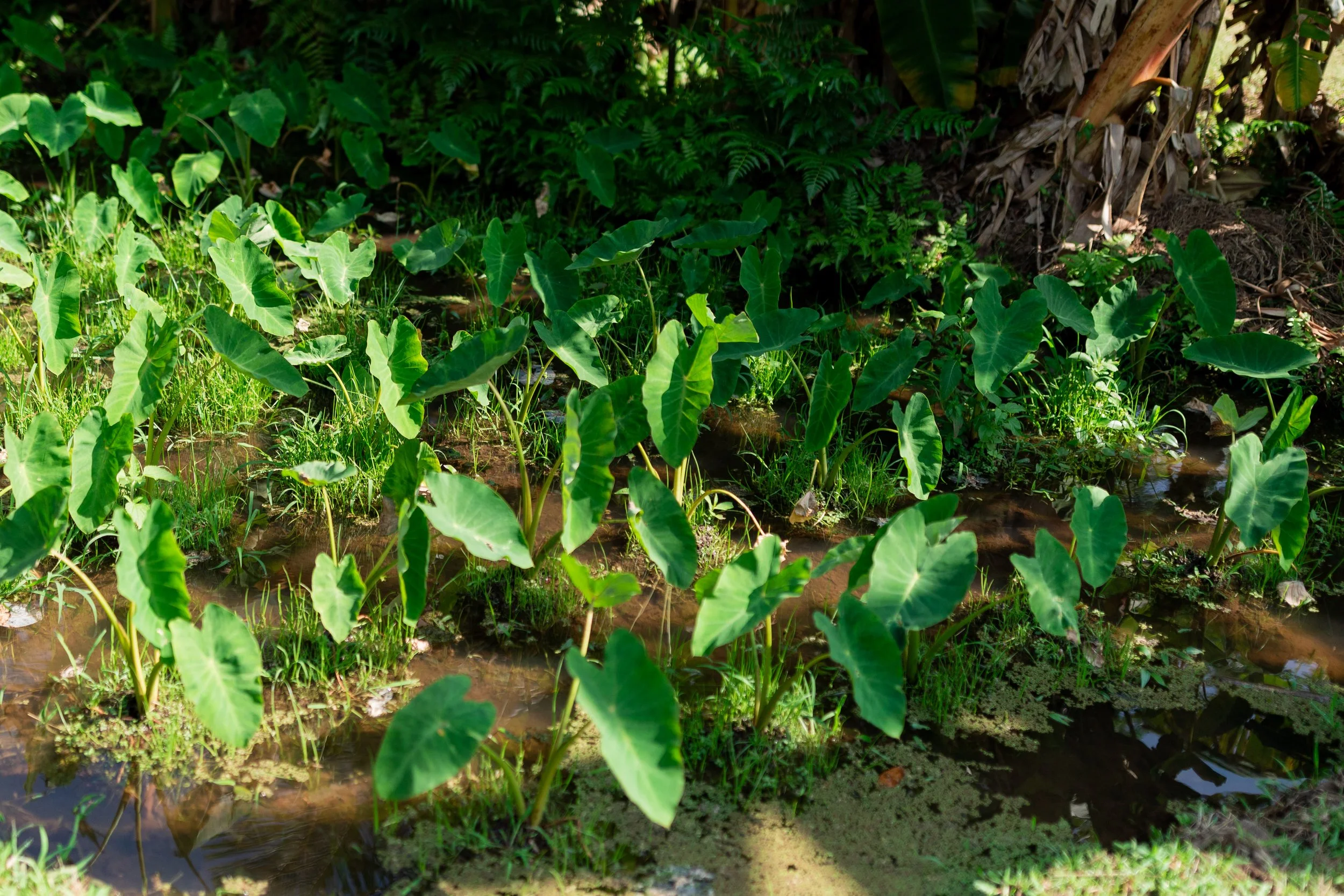
For generations, acres of loʻi kalo have sustained the people of Hawaiʻi. These sophisticated, regenerative water systems have enabled centuries of successful farming across the pae ʻāina. Water is drawn from streams, circulated through kalo fields, and returned downstream, enriched with nutrients from the fertile ecosystem. The system doesn’t just maintain itself; it enhances its surroundings. Even if it ended there, it would be regenerative, but it doesn’t. The nutrient-rich wai continues its journey, feeding ʻoʻopu, iʻa, and limu along the stream, which are harvested for food. Further downstream, these nourished species support larger fish and other marine life in the loko iʻa, creating a layered system of abundance that has fed families across generations.
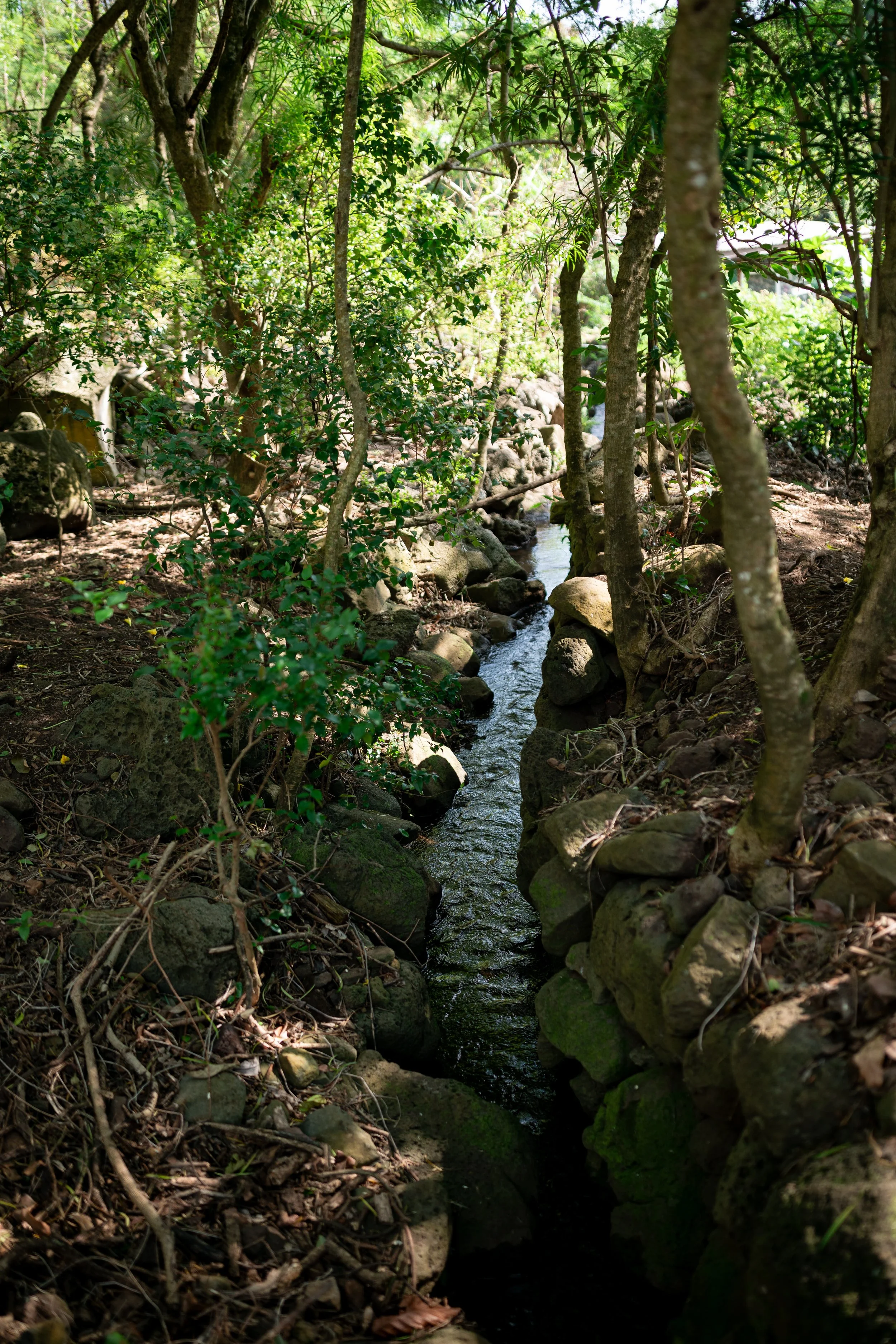
At the heart of this system is the ʻauwai: the main channel that delivers water from the stream to the loʻi. Without a functioning ʻauwai, kalo cannot grow. Without nutrient circulation, the entire system breaks down. More than infrastructure, the ʻauwai represents kuleana: the responsibility to care for the source so that its benefits can flow downstream. When this vital link is obstructed, the whole system suffers. To sustain regeneration, we must mālama the path that carries life forward.
The Hawaiʻi Tourism Authority’s Community Tourism Collaborative – Community Stewardship (CTC-CS) program embraces this ethic. Just as the ʻauwai sustains the loʻi, our wahi pana (beloved places) are the foundation upon which both our communities and the visitor industry depend. CTC-CS is built on the understanding that to sustain abundance and a sense of place today, we must care for the lands that nourish us and engage thoughtfully with the systems that impact them. The program supports community-based organizations in their ability to welcome visitors into mālama ʻāina-based stewardship, contributing to a growing set of place-based experiences that actively support protection, regeneration, and deeper understanding of place.
A regenerative visitor industry in Hawaiʻi depends on the leadership and passion of community stewardship organizations working to regenerate ʻāina that can become strained by tourism. The CTC-CS program affirms this kuleana as a shared responsibility with visitors, equipping organizations to expand their impact and engage tourism as a pathway for stewardship and care. In doing so, it contributes to a growing set of ʻāina-based experiences supporting natural and cultural resource protection and deepen understanding of place.
Organizations selected for the 2026 CTC-CS cohort will join a group of mission-aligned Maui-based* nonprofit organizations in a four-month program focused on building organizational capacity to design, strengthen, and sustain visitor volunteer (voluntourism) programs and managed access initiatives. Through on-demand content, cohort gatherings, in-person workshops, individual coaching, and attendance at HTA’s annual Fall Tourism Conference, participants will build confidence in creating meaningful volunteer or managed access experiences, engaging visitors both on-site and beyond, and navigating the systems and relationships that constitute Hawaiʻi’s visitor landscape.
To help seed growth of these efforts, each organization that completes the program will receive a $10,000 capacity building sub-award, intended to support the development and expansion of visitor volunteer and managed access experiences aligned with each organization’s stewardship mission and goals.
*Applications for future cohorts may be open to organizations from other islands.
MEET THE 2026 COHORT
Friends of Twin Falls Maui works to care for and strengthen the relationship between community, visitors, and the lands and waters surrounding Twin Falls in Hāmākualoa, Maui. Located along heavily traveled Hāna Highway, Twin Falls is both a local place and a popular visitor destination, creating opportunities to rethink how visitation can contribute to rather than detract from the health of place and community.
Through this program, Friends of Twin Falls Maui is exploring ways to more intentionally engage visitors in stewardship and orient them before they continue their journey along Hāna Highway. Their work seeks to strengthen a model of visitation grounded in mālama ʻāina and education.
Imua Family Services has served Maui County’s children and families for decades through programs supporting childhood development, inclusion, and community well-being. The Will Smith Imua Discovery Garden in Wailuku extends that mission into a living outdoor environment where children, families, and community members can learn, gather, play, and connect with the natural world, culture, and each other.
By considering how to engage visitors in a space designed for local children, families, and community - and potentially involving them in constructing the garden’s Hawaiian plant area - Imua is exploring how tourism can help strengthen resources and relationships that primarily serve Maui.
Makana No Ke Kaiāulu is the brainchild of nā Anakē Janice, Gracey, and Velma, residents of Paukūkalo Hawaiian Homestead in Waiheʻe. Their work centers around strengthening their community through the relationships, cultural traditions, and infrastructure that sustain it.
Makana No Ke Kaiāulu is using this program to explore how visitors might support this work. Its developing stewardship initiative considers how visitors can enter into a pono relationship with place and kaiāulu through learning and contribution, while ensuring that community priorities, cultural knowledge, and the long-term care of their places remain at the center of their hana.
Mālama Hāmākua Maui cares for Hāmākualoa Kulāiwi, a nearly 300 acre open space preserve near Peʻahi established by the County of Maui to provide open space for the communities of Maui. For the last few years, Mālama Hāmākua Maui has worked tirelessly to clear invasive plants and rubbish, re-establish native plants in place, and care for the open space, turning it from neglected to beloved.
Mālama Hāmākua Maui is exploring how visitors can be invited into their work to lend their hands and build pilina with the preserve. They are actively exploring the creation of an open ethnobotanic garden the celebrates and shares the sacred relationship between plants and people of this place.
Pacific Whale Foundation is a Maui-based nonprofit dedicated to protecting the ocean through science, advocacy, and conservation. For more than four decades, its work has connected research and education with efforts to protect whales, dolphins, and marine ecosystems in Hawaiʻi and around the world.
In recent years, PWF has turned more meaningfully toward their community and asked what they can do to support other Maui organizations. The organization is seeking to enhance their Mālama Pono volunteer program by developing an orientation system that can help participants better understand the places, pilina, and kuleana within which their volunteer work takes place.
Treecovery was formed in response to the August 2023 Maui fires to help restore the trees and landscapes lost across affected communities. Its work supports the recovery of Lahaina, Kula, and other fire-impacted areas through tree propagation, planting, care, and the long-term work required to restore a healthy community through the growth of a collective tree canopy.
Treecovery is exploring how visitors can become more active contributors to this long horizon of recovery. Their developing initiative seeks to create an opportunity for visitors to contribute to Maui’s future through tangible acts of care for the trees that will eventually take root in Lahaina and Kula.
The Hawai’i Tourism Authority’s 2026 Community Tourism Collaborative – Community Stewardship (CTC-CS) is a four-month intensive program for Maui nonprofits interested in engaging visitors in care of ‘āina through visitor volunteer (“voluntourism”) or managed access experiences. Organizations that complete the program receive a one-time capacity building sub-award to help advance this work.
The program runs from July through October and is structured around roughly two-week periods. Full participation in all components of the program is required.
Each two-week period includes the following components:
Guided, self-paced online content that cohort members complete on their own schedule. This content covers regenerative organizational principles and topics related to that period’s experience development focus.
A live, virtual gathering where cohort members come together to apply ideas, share progress, ask questions, and learn from one another.
The program also includes three in-person events, scheduled for July, September, and October. These events are held in place of the virtual gathering for these periods:
A two-day workshop on Maui focused on regeneration, culture, community, ʻāina, intent, and experience design (July 30-31).
A three-day experience on Oʻahu that includes a one-day workshop focused on sharing, networking, and readiness, followed by participation in the HTA Fall Tourism Conference (September 23-25).
A concluding half-day commencement and hōʻike on Maui, offering time for reflection, planning beyond the program period, and networking with other ʻāina organizations and the local visitor industry (October 29).
ABOUT THE 2026 PROGRAM
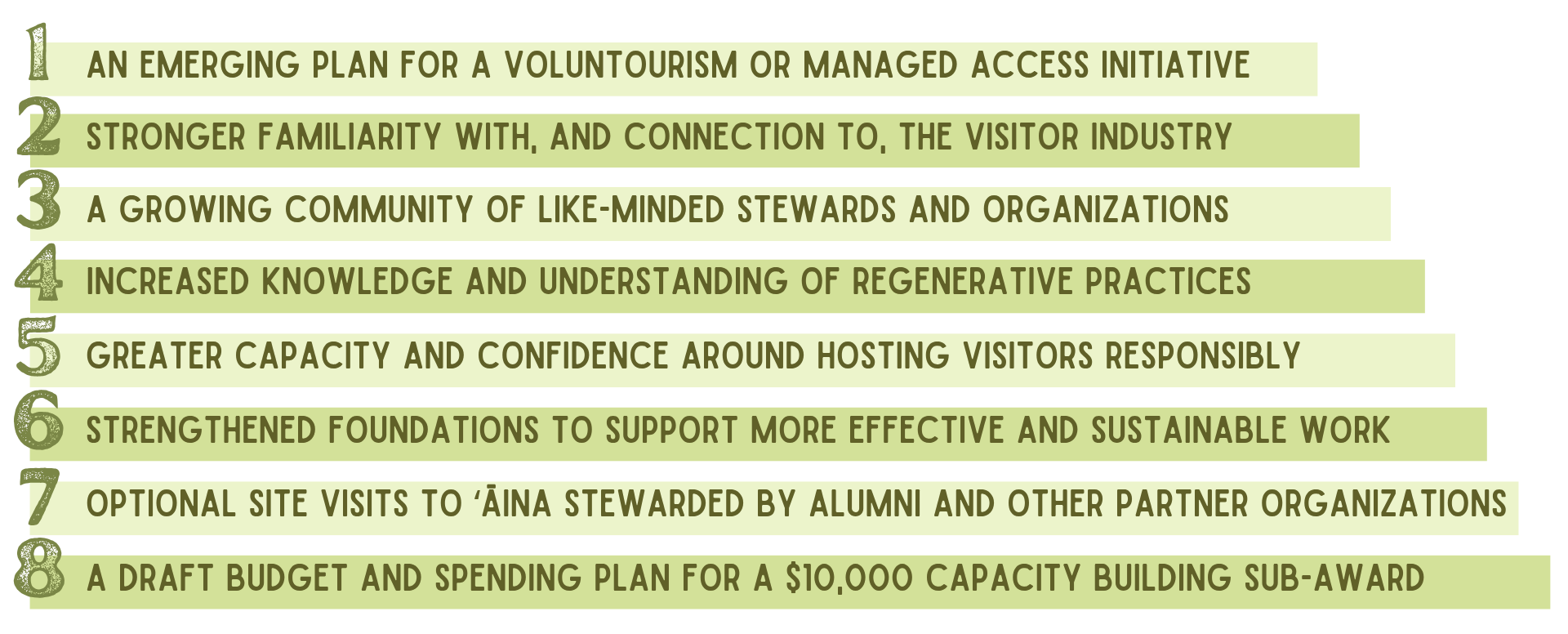
By the end of the program, participants will have:
-
Applications for the 2026 cohort closed on June 8, 2026 at 12:00 PM.
Please keep an eye on this website for announcements about future cohorts.
-
Maui-based 501(c)(3) organizations or Hawaiʻi nonprofits who are stewarding ʻāina are eligible to apply for the 2026 cohort. Applications for future cohorts may be open to organizations on other islands.
The program is best suited for organizations that already host volunteers or those considering managed access to a site. For-profit businesses, as well as nonprofit organizations that do not steward and do not plan to steward ʻāina, are ineligible for this program. We recommend these businesses and organizations check out the CTC - Regenerative Experiences program to see if they are a good fit.
-
Yes. Organizations that participate in all required components of the program will be eligible to receive a $10,000 capacity-building sub-award upon full completion of the non-alumni portion of the program. This sub-award is intended to support continued development of a voluntourism or managed access experience designed through the program. Sub-awards are expected to be delivered in or around November 2026.
A voluntourism or managed access initiative development plan and tentative budget outlining how the funds are intended to be used are also required. Standard funding exclusions apply.
A visitor experience development plan and tentative budget outlining how the funds are intended to be used are also required. Standard funding exclusions apply.
-
Organizations selected for the CTC–CS program will join a mission-aligned cohort of Maui-based ʻāina stewardship organizations that already host volunteers or are considering managed access, and are interested in thoughtfully engaging paying visitors to deepen impact, support their operations, and channel tourism for the public good. From July through October, participants will take part in an intensive capacity-building program that blends guided learning, live gatherings, and workshop opportunities, focused on regenerative practices, responsible visitor engagement, and experience development rooted in stewardship and community care.
You can expect:
Structured, self-paced learning that builds your understanding of regenerative practices and visitor experience design over time
Regular opportunities to meet with fellow cohort members, share progress, work through challenges, and learn collaboratively
Workshop and gathering experiences that create space for deeper reflection, refinement, and cross-cohort connection
Guided support in shaping a clear, values-aligned plan and tentative budget for a voluntourism or managed access experience
Eligibility for a $10,000 capacity-building sub-award to help advance the experience you develop through the program
An expanded network and sense of community with other Maui-based ʻāina stewards navigating similar questions and opportunities
Connections to like-minded and values-aligned regenerative experience operators on Maui
Participation in the HTA Fall Tourism Conference, focused on sharing your work and connecting with the broader visitor industry
You should not expect:
A fully launched or visitor-ready initiative by the end of the program; the focus is on design, refinement, readiness, and industry networking
A formal pilot or testing phase as part of the cohort, though you may be encouraged to explore light testing independently
-
The following dates are subject to change.
Monthly live workshops will take place throughout the program as describe above. Dates will be released at a later time. Regular meeting time is expected to be 5:30 - 7:00 PM on Tuesdays.
Important Dates:
5/8/26: Application opens
5/15/26: Online Info Session
6/8/26: Application deadline (12:00 PM)
6/26/26: Cohort notified
7/3/26: Acceptance date
7/7/26: First live virtual cohort meeting (orientation)
7/30/26-7/31/26: In-person two-day workshop (Maui)
9/23/26: In-person cohort workshop (Oʻahu)
9/24/26-9/25/26: HTA Fall Tourism Conference (Oʻahu)
10/6/26: Final virtual meeting
10/29/26: In-person cohort commencement (Maui)
10/31/26: Final experience plan and budget due
November 2026: Capacity building sub-award distributed
-
Applicants will be notified of selection decisions by June 26, 2026.
Applications will be reviewed by a team of evaluators composed of program staff, visitor industry representatives, ʻāina stewards, and regenerative tourism practitioners who carefully read and discuss each submission. Our goal is not only to identify strong applicants, but to assemble a cohort that can meaningfully learn from one another through shared work on visitor experience development, stewardship, and capacity-building.
In our review, we consider:
Demonstrated commitment to ʻāina-based stewardship and community responsibility
Existing operations or programs that can be further developed to engage visitors through voluntourism or managed access
Readiness for active participation in an intensive program that includes work between gatherings
Cohort balance, with attention to a mix of organizations, sites, and approaches that support shared learning
Final selections aim to create a collaborative learning environment where organizations are at similar stages of readiness, can support one another’s growth, and leave the program better equipped to host visitors responsibly and sustainably.
PROGRAM FAQ
CONTACT US
Hoping to learning more about the move toward a more regenerative visitor industry for Hawaiʻi?
Interested in joining one of HTA’s cohort programs, or learning more about upcoming Foundational Technical Assistance workshops?
Fill out the contact form to the right, and we will be in touch soon.