


2026 COHORT INFORMATION
MO‘OLELO
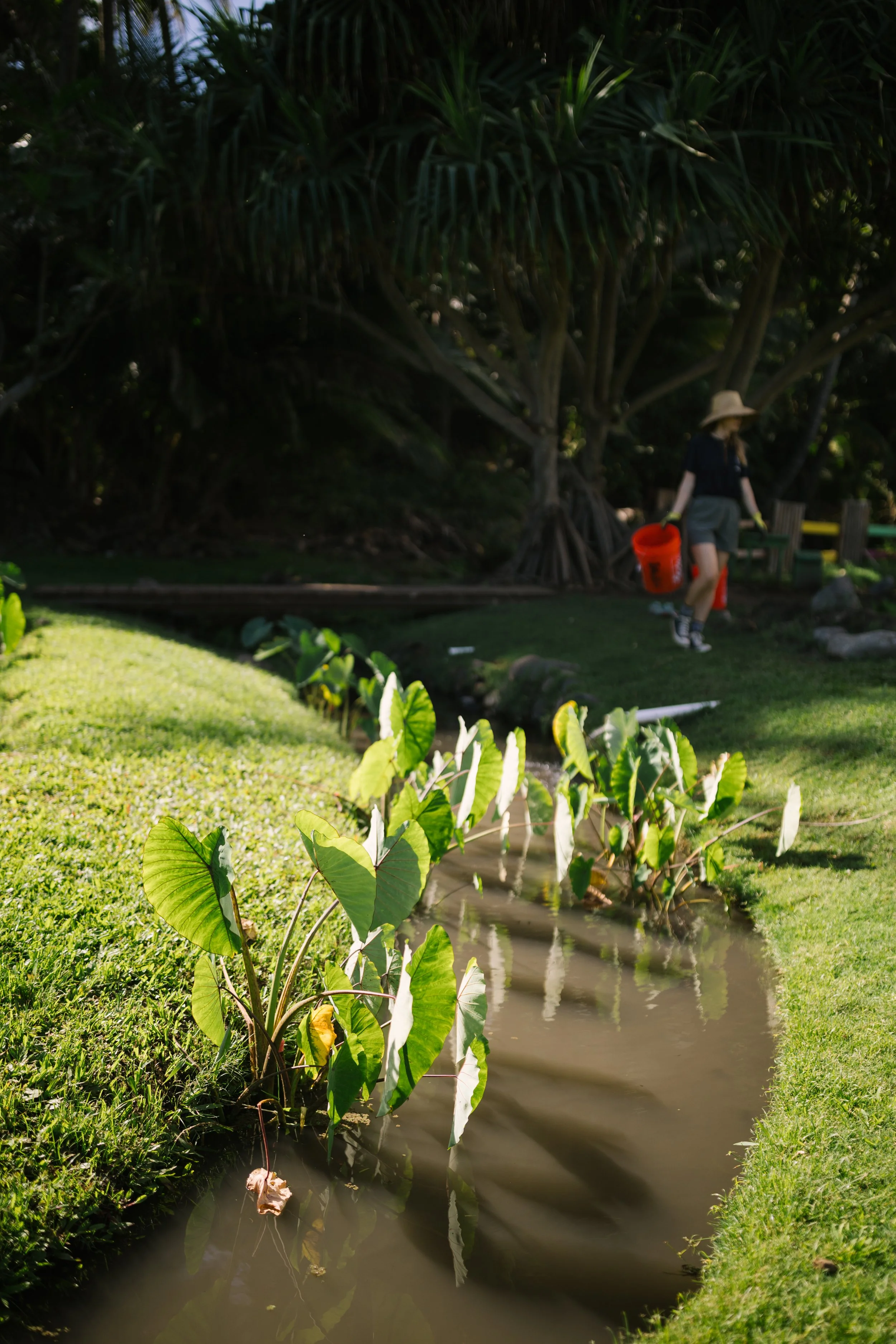
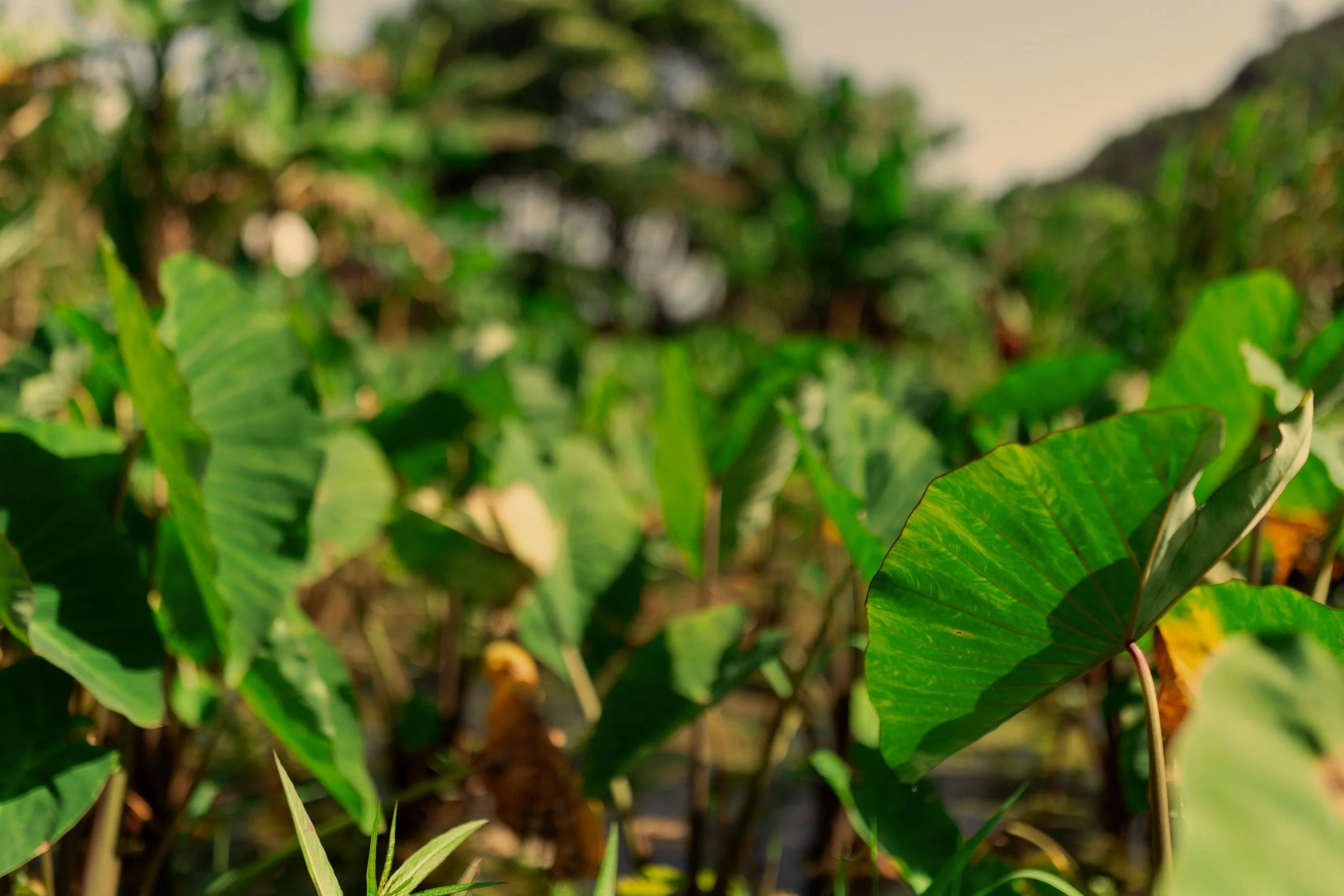
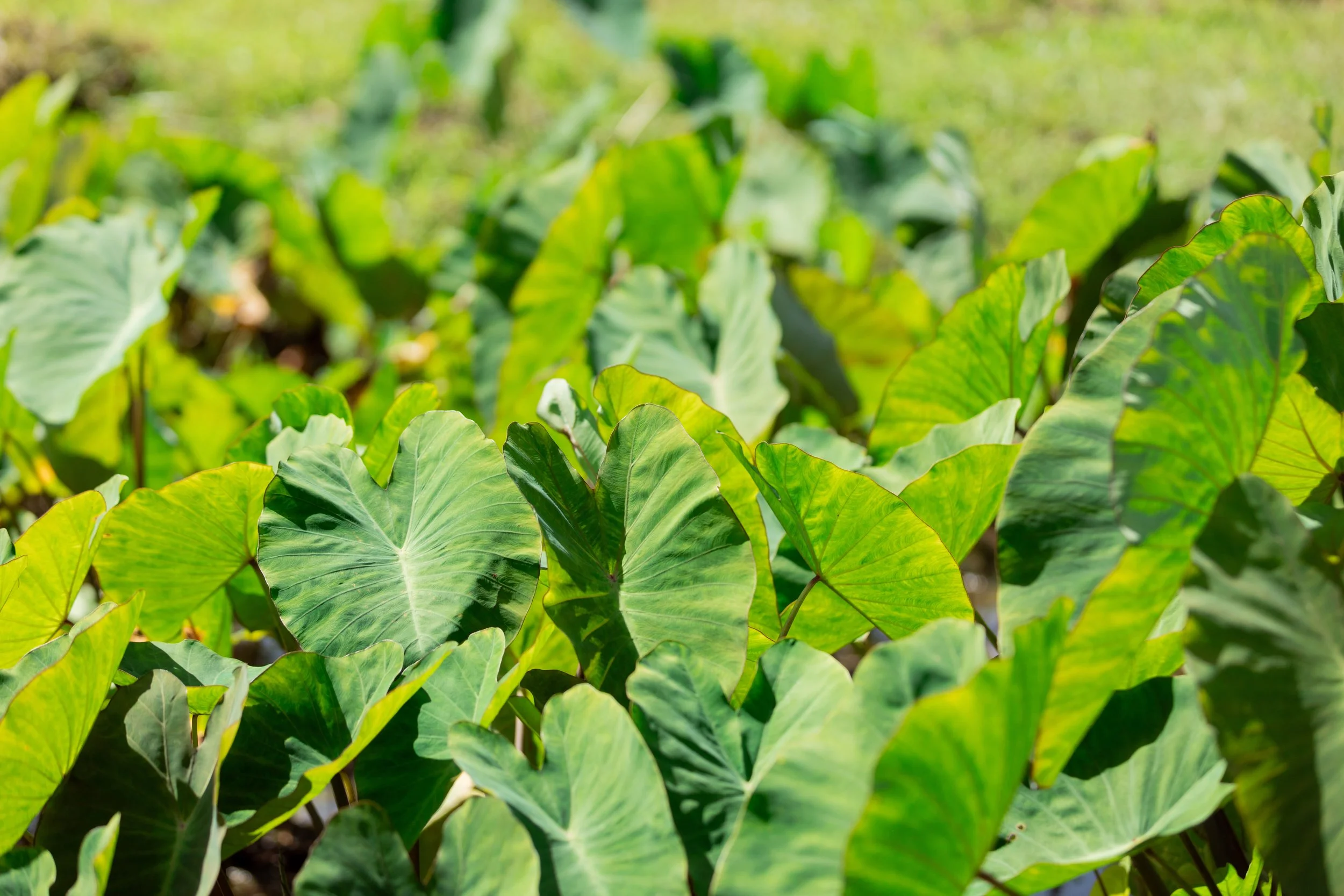
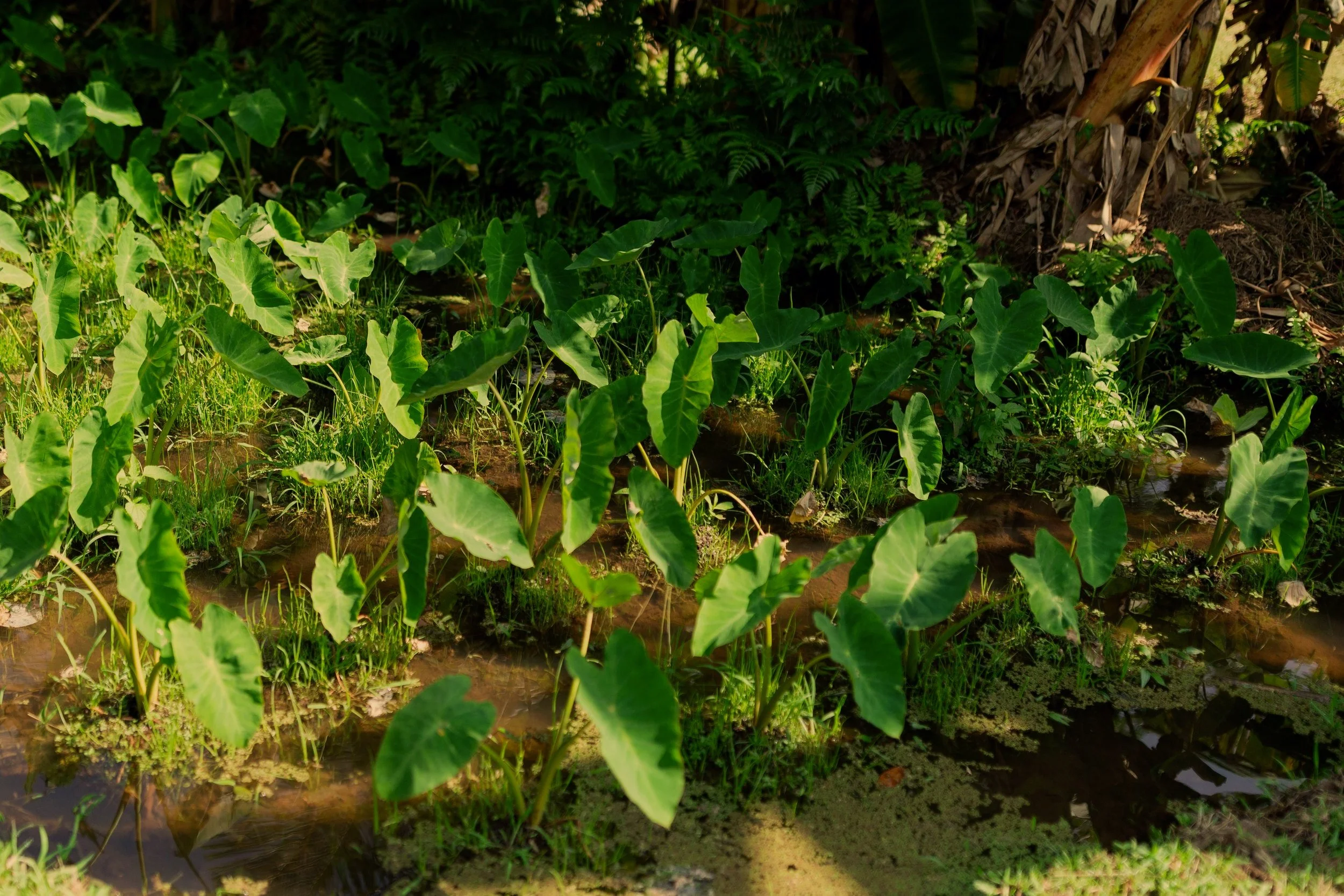
For generations, acres of loʻi kalo have sustained the people of Hawaiʻi. These sophisticated, regenerative water systems have enabled centuries of successful farming across the pae ʻāina. Water is drawn from streams, circulated through kalo fields, and returned downstream, enriched with nutrients from the fertile ecosystem. The system doesn’t just maintain itself; it enhances its surroundings. Even if it ended there, it would be regenerative, but it doesn’t. The nutrient-rich wai continues its journey, feeding ʻoʻopu, iʻa, and limu along the stream, which are harvested for food. Further downstream, these nourished species support larger fish and other marine life in the loko iʻa, creating a layered system of abundance that has fed families across generations.
At the end of this system is the hoʻiwai: the point where water exits the loʻi and returns to the stream. The hoʻiwai ensures the unbroken flow from mountain to ocean, restoring water to the source in a better condition than it was received. It is a model of reciprocity and renewal, sustaining life downstream and reminding us that true abundance comes not from consumption, but from restoration.
The Hawaiʻi Tourism Authority’s Community Tourism Collaborative - Regenerative Experiences (CTC-RE) program embraces this ethic. Just as the hoʻiwai returns enriched water to its source, regenerative visitor experiences return value to Hawaiʻi’s people, ʻāina, and way of life. The program supports organizations in designing, refining, or expanding visitor experiences that honor reciprocal relationships between visitors and kamaʻāina, natural resources, and place. These experiences uplift community, attract mindful travelers, diversify visitor industry offerings, and foster lifelong commitments among visitors to mālama ʻāina, cultural learning, and aloha.
A regenerative visitor industry in Hawaiʻi depends on the leadership of businesses and nonprofits that prioritize community, culture, and ʻāina. The CTC-RE program affirms this kuleana to create experiences that give back more than they take, strengthening the foundations of a thriving, reciprocal tourism economy.
Organizations selected for the 2026 CTC-RE cohort will join a group of mission-aligned, Maui-based* businesses and nonprofits in a four-month program focused on developing regenerative visitor experiences that contribute to local communities, natural and cultural resources, and other elements of place while diversifying the ind. Through on-demand content, cohort gatherings, in-person workshops, individual coaching, and attendance at HTA’s annual Fall Tourism Conference, participants will deepen their understanding of regenerative principles and apply them to experience design, business and organizational operations, and long-term decision-making, building offerings that are values-aligned, place-based, and contribute to a more diverse and community-aligned visitor industry in Hawaiʻi.
To help seed growth of these efforts, each participating business or nonprofit that completes the program will receive a $10,000 capacity building sub-award, intended to support the development and expansion of regenerative experiences that create new opportunities for visitors to engage meaningfully with Hawaiʻi nei.
*Applications for future cohorts may be open to organizations from other islands.
MEET THE 2026 COHORT
Haleakalā Farm is an Upper Kula farm rooted in regenerative agriculture, wellbeing, creativity, and connection to ʻāina. The diversified farm grows produce, herbs, flowers, and succulents while creating value-added products and offering workshops and immersive experiences. Its work is guided by a vision to sustain the land, nurture community, and inspire more regenerative ways of living.
The farm is is working to strengthen and expand its offerings, creating experiences that bring together its various functions. The farm is exploring how these experiences can deepen visitors’ connection to ʻāina while strengthening the farm and the regenerative practices at its core.
Maui Majesty is a 24-acre farm in Lower Kula dedicated to demonstrating and teaching regenerative approaches to caring for the land. Through its “Earth Repair” work, the farm puts practices such as soil restoration, water harvesting, permaculture, reforestation, and natural building into action, sharing what it learns through tours, workshops, and other educational experiences.
Maui Majesty is enhancing its offerings to create more opportunities to learn from the regenerative practices taking place there. By strengthening these experiences, visitors can carry what they learn into their own communities while helping expand the farm’s regenerative impact on Maui.
Maui Pacific Divers offers small-group scuba diving and snorkeling experiences that allow guests to encounter Maui’s marine environment in an intimate setting. By intentionally keeping groups small, Captain Mikal and Maggie creates opportunities for closer interaction among guides and guests and a more personal experience of the ocean than is possible in many larger tour settings.
Maui Pacific Divers joined the CTC program to explore how that intimate model can be an even stronger foundation for regeneration of Maui’s ocean. Ideas include engaging snorkeling and scuba diving guests in surveying the marine environment, providing valuable data to conservationists.
PacWhale Eco-Adventures offers a variety of ocean excursions that support Pacific Whale Foundation’s research, education, and conservation mission. Its cruises connect visitors with Maui’s marine environment while generating resources for protecting whales, dolphins, and oceans.
After years of near-exclusive focus on their conservation and scientific work, PacWhale is in the midst of turning their waʻa in a more holistic direction. In doing so, they are are exploring how their visitor experiences can connect more deeply with Maui’s people, places, communities, and culture, transforming how their guests see and interact with their host communities.
ABOUT THE 2026 PROGRAM
The Hawaiʻi Tourism Authority’s 2026 Community Tourism Collaborative – Regenerative Experiences (CTC-RE) program is a four-month intensive program that assists Maui businesses and nonprofits in developing plans for new or revamped regenerative tourism experiences. Organizations that complete the program receive a one-time capacity building sub-award to help advance this work.
The program runs from July through October and is structured around roughly two-week periods. Full participation in all components of the program is required.
Each two-week period includes the following components:
Guided, self-paced online content that cohort members complete on their own schedule. This content covers regenerative organizational principles and topics related to that period’s experience development focus.
A live, virtual gathering where cohort members come together to apply ideas, share progress, ask questions, and learn from one another.
The program also includes three required in-person events, scheduled for July, September, and October. These events are held in place of the virtual gathering for these periods:
A two-day workshop on Maui focused on regeneration, culture, community, ʻāina, intent, and experience design (July 30-31).
A three-day experience on Oʻahu that includes a one-day workshop focused on sharing, networking, and readiness, followed by participation in the HTA Fall Tourism Conference (September 23-25).
A concluding half-day commencement and hōʻike on Maui, offering time for reflection, planning beyond the program period, and networking with the local visitor industry and other partners (tentatively October 29).
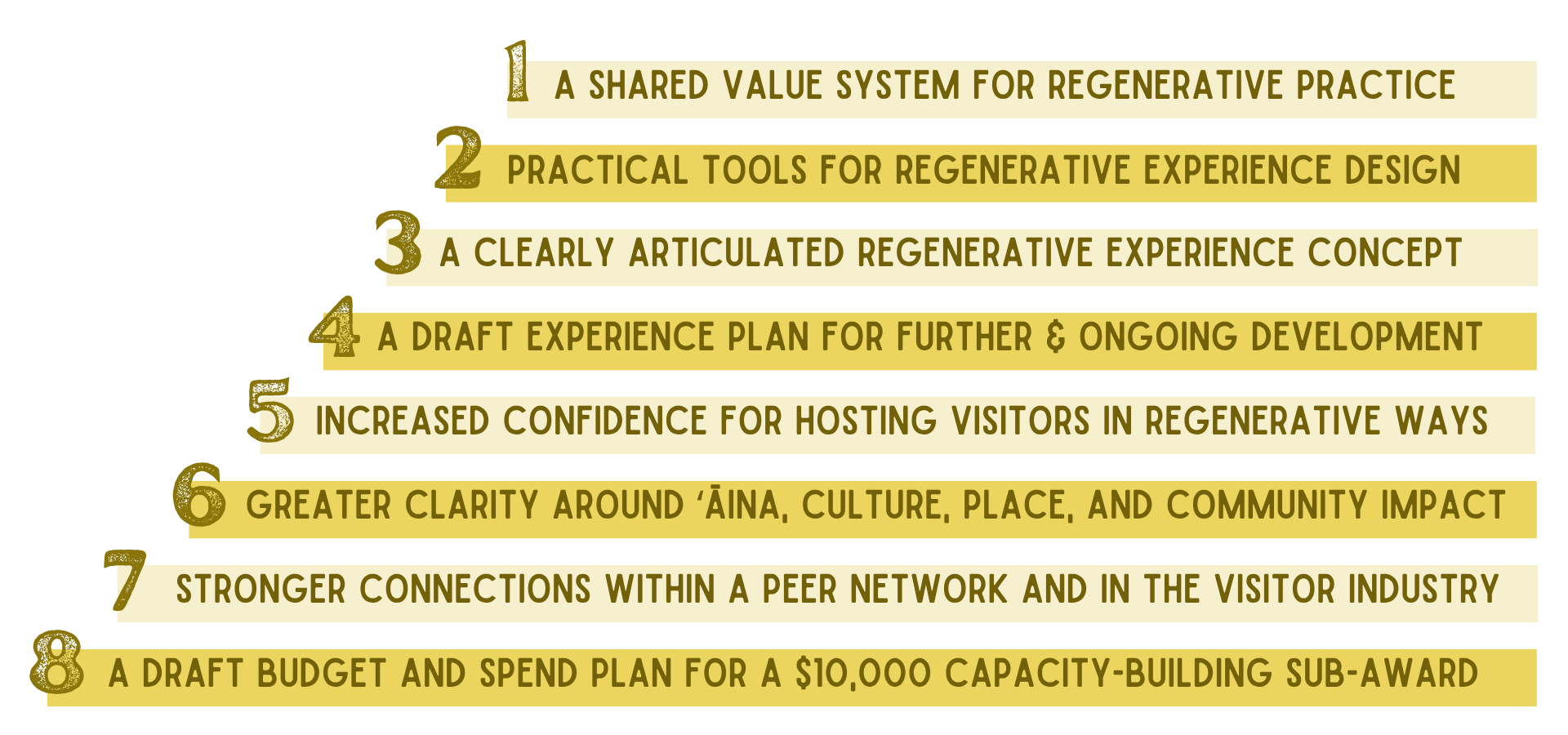
By the end of the program, participants will have:
PROGRAM FAQ
-
Applications for the 2026 cohort closed on June 8, 2026 at 12:00 PM.
Please keep an eye on this website for announcements about future cohorts.
-
The 2026 cohort is open to Maui-based regenerative experience providers looking to develop new offerings, providers with existing visitor experiences but who are aiming to become more regenerative, and organizations looking to host visitors for the first time. Applications for future cohorts may be open to organizations on all islands.
Applicants must be registered to do business in the State of Hawaiʻi as a for-profit business, 501(c)(3) non-profit, or Hawaiʻi nonprofit.
-
Most ʻāina stewardship organizations that host volunteers or are considering managed access to a site will be best suited for the CTC–Community Stewardship (CTC-CS) program, which focuses on engaging visitors within stewardship contexts. The CTC–Regenerative Experiences (CTC-RE) program is generally better suited for those whose primary work centers on offering visitor experiences as part of their operations and who want to more deeply integrate regenerative principles into those experiences and decisions.
If your organization overlaps with both, we encourage you to apply to the program that best reflects your work and goals. Our team will review applications holistically and may follow up if another program appears to be a better fit.
-
Yes. Business and nonprofits that participate in all required components of the program will be eligible to receive a $10,000 capacity-building sub-award upon full completion of the non-alumni portion of the program. This sub-award is intended to support continued development of the regenerative visitor experience designed through the program. Sub-awards are expected to be delivered in or around November 2026.
A regenerative visitor experience plan and tentative budget outlining how the funds are intended to be used are also required. Standard funding exclusions apply. See award section above for details.
-
You can expect:
Guided learning and cohort gatherings focused on regenerative principles, experience design, and responsible visitor engagement
Opportunities to build pilina with other Maui-based organizations and businesses and 2024 cohort alumni working in related spaces
Coaching, tools, templates, and other support to help you shape and refine a visitor experience aligned with your values and operations
Workshop opportunities and in-person gatherings designed for deeper collaboration and reflection (with travel support provided)
A clear pathway toward developing an experience plan and budget, with eligibility for a $10,000 capacity-building sub-award on completion
Participation in the HTA Fall Tourism Conference, focused on sharing your work and connecting with the broader visitor industry
You should not expect:
A fully launched or visitor-ready experience by the end of the program; the focus is on design, refinement, readiness, and industry networking
A formal pilot or testing phase as part of the cohort, though you may be encouraged to explore light testing independently
-
The following dates are subject to change.
Monthly live workshops will take place throughout the program as describe above. Dates will be released at a later time. Regular meeting time is expected to be 5:30 - 7:00 PM on Thursdays.
Important Dates:
5/8/26: Application opens
5/15/26: Online Info Session
6/8/26: Application deadline (12:00 PM)
6/26/26: Cohort notified
7/3/26: Acceptance date
7/9/26: First live virtual cohort meeting (orientation)
7/30/26-7/31/26: In-person two-day workshop (Maui)
9/23/26: In-person cohort workshop (Oʻahu)
9/24/26-9/25/26: HTA Fall Tourism Conference (Oʻahu)
10/8/26: Final virtual meeting
10/29/26: In-person cohort commencement (Maui)
10/31/26: Final experience plan and budget due
November 2026: Capacity building sub-award distributed
-
Applicants will be notified of selection decisions by June 26, 2026.
Applications will be reviewed by a team of evaluators composed of program staff, visitor industry representatives, and regenerative tourism practitioners who carefully read and discuss each submission. Our goal is not only to identify strong applicants, but to assemble a cohort that can meaningfully learn from one another through shared work on experience development, regenerative principles, and capacity-building.
We consider:
Readiness for an intensive program, including the ability to participate fully in required gatherings, workshops, and between-session work
Existing visitor-facing activity or clear near-term plans to host visitors, with operational foundations already in place (e.g., staffing, access)
Demonstrated commitment to regenerative values, including care for ʻāina and community , cultural grounding, and long-term kuleana
Openness to reflection and change, particularly around how experiences, operations, and decisions can be shaped with regenerative principles
Cohort fit, with attention to assembling a group of Maui-based organizations and businesses that are at similar stages of readiness and can learn meaningfully from one another
Final selections aim to create a collaborative learning environment where organizations are at similar stages of readiness, can support one another’s capacity and experience development, and leave the program better prepared to host visitors in regenerative ways.
CONTACT US
Hoping to learning more about the move toward a more regenerative visitor industry for Hawaiʻi?
Interested in joining one of HTA’s cohort programs, or learning more about upcoming Foundational Technical Assistance workshops?
Fill out the contact form to the right, and we will be in touch soon.